
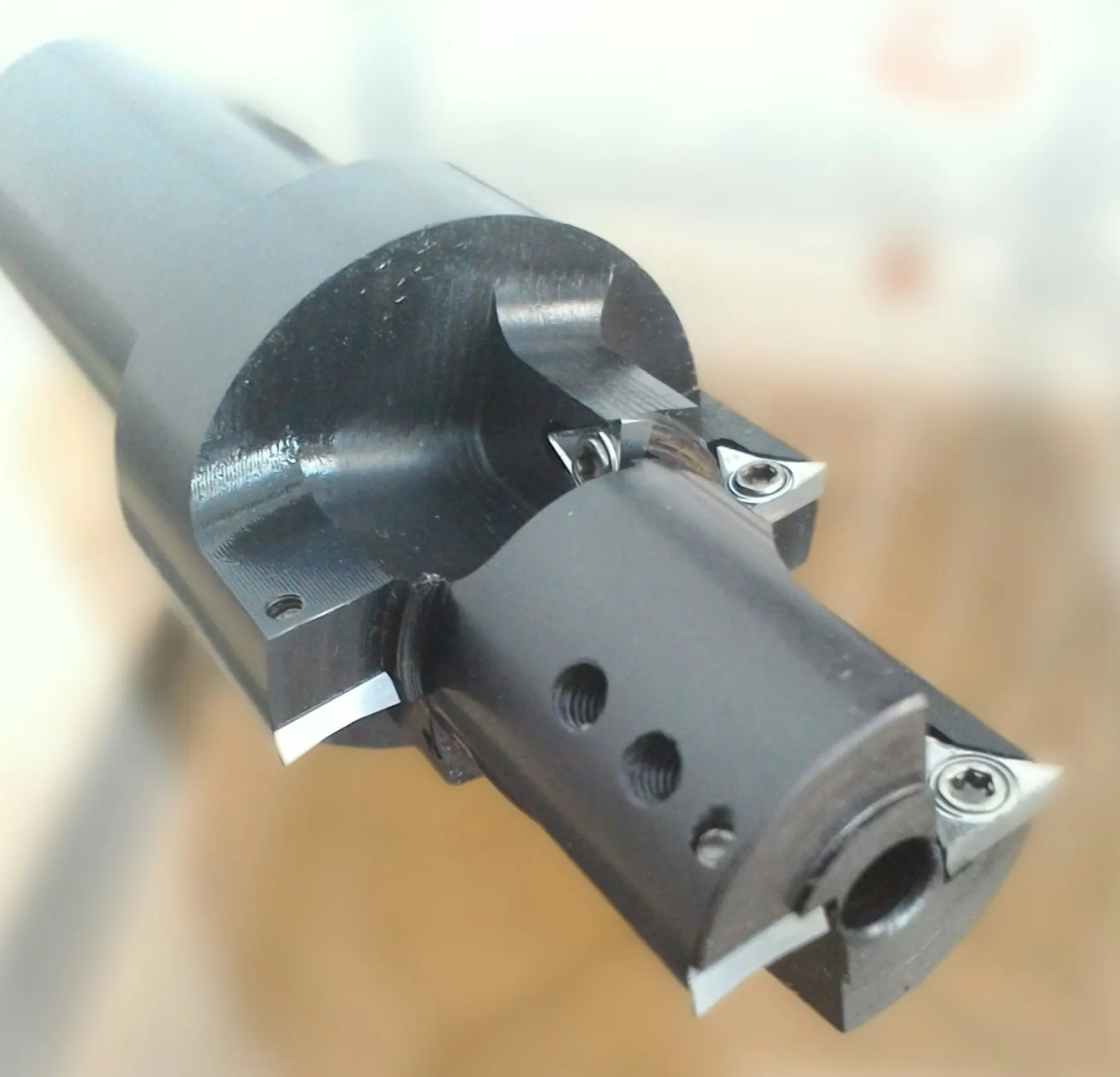
The problem and why it matters
In a multi-edge tool, a small radial or axial position error can make one edge engage first and carry a disproportionate share of the load.
A common datum, a defined inspection sequence and either adjustment or compensation must be designed into the body and insert pockets.
Selection and design logic
Final control is not only a static tool measurement. Runout from the holder, spindle and clamping method must also be checked in the actual setup.
If one edge leads the others, it cuts a thicker chip and wears faster; trailing edges may rub instead of cutting. The result can be uneven wear, vibration and gradual dimensional drift.
Implementation details and controllable errors
First define which edges perform roughing and which perform finishing. In adjustable tools, a screw or wedge needs adequate range with controlled sensitivity; in fixed tools, pocket accuracy and insert consistency become even more important.
Evaluation and conclusion
Measure on a presetter or indicator after tightening with the actual assembly torque, and repeat several remove-and-refit cycles to quantify repeatability. Check the installed tool as well so body error is not confused with holder or spindle error.