
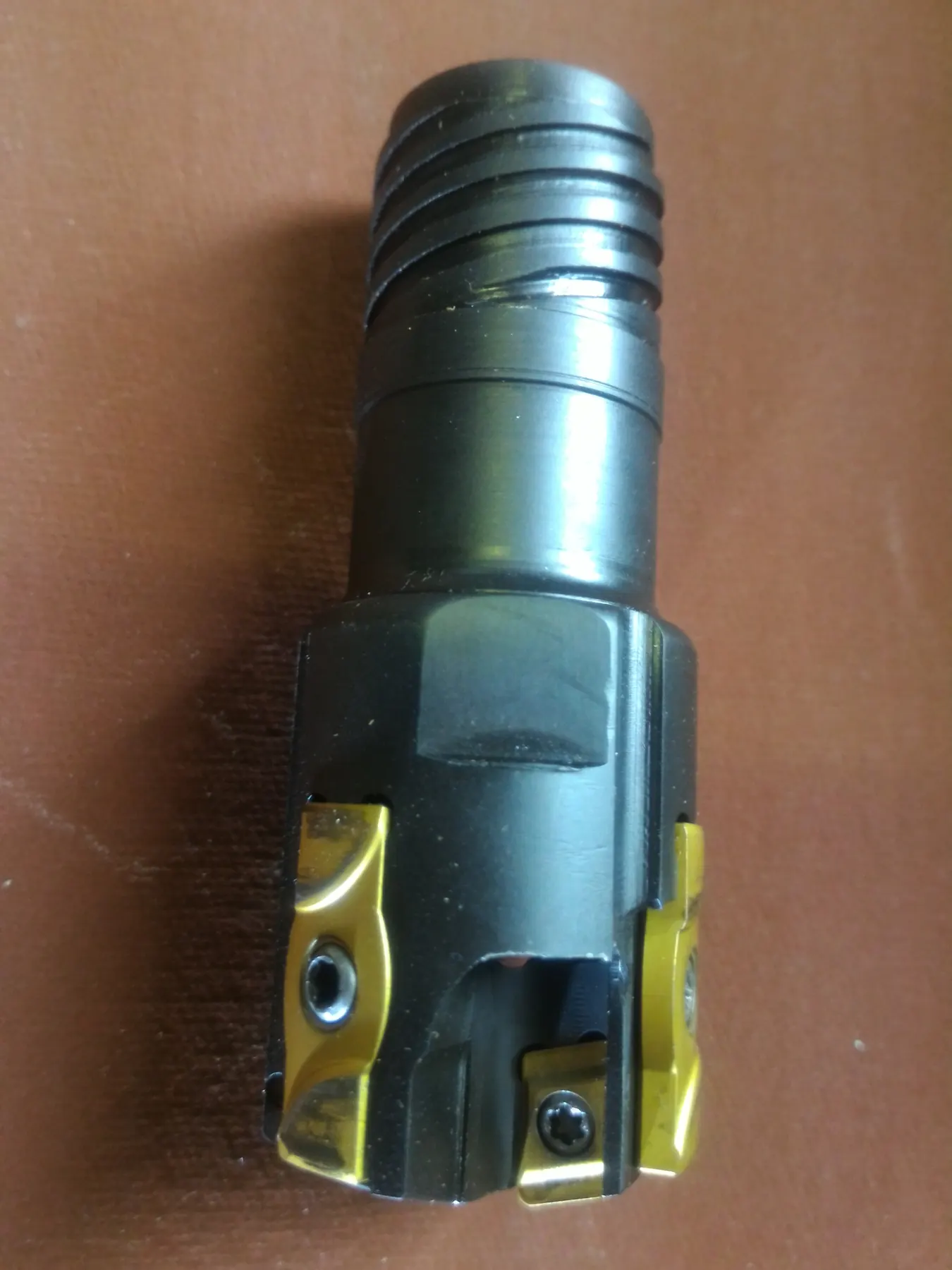
The problem and why it matters
Runout prevents the edges from cutting equal chip thicknesses. The edge with the greatest effective radius carries more load and heat.
Uneven wear, degraded surface finish and premature replacement can follow even when the workpiece grade and cutting data are otherwise correct.
Selection and design logic
Interfaces must be clean, and runout should be measured on the complete system: cutting tool, holder and spindle.
In a multi-edge tool, the highest edge enters first and may remove most of the material even though feed calculations assume equal load sharing. This mismatch can rapidly shorten one edge’s life.
Implementation details and controllable errors
Runout may originate in the body, insert pockets, insert variation, dirty interfaces, holder or spindle. Measuring only one insert tip cannot isolate the cause; inspection should progress from the taper or interface through each stage to the cutting edges.
Evaluation and conclusion
Mark each edge and record its wear. If the most heavily loaded edge aligns with maximum runout, correct the interface or adjustment before changing cutting data. Reducing feed without removing the runout only masks the underlying fault.