
The problem and why it matters
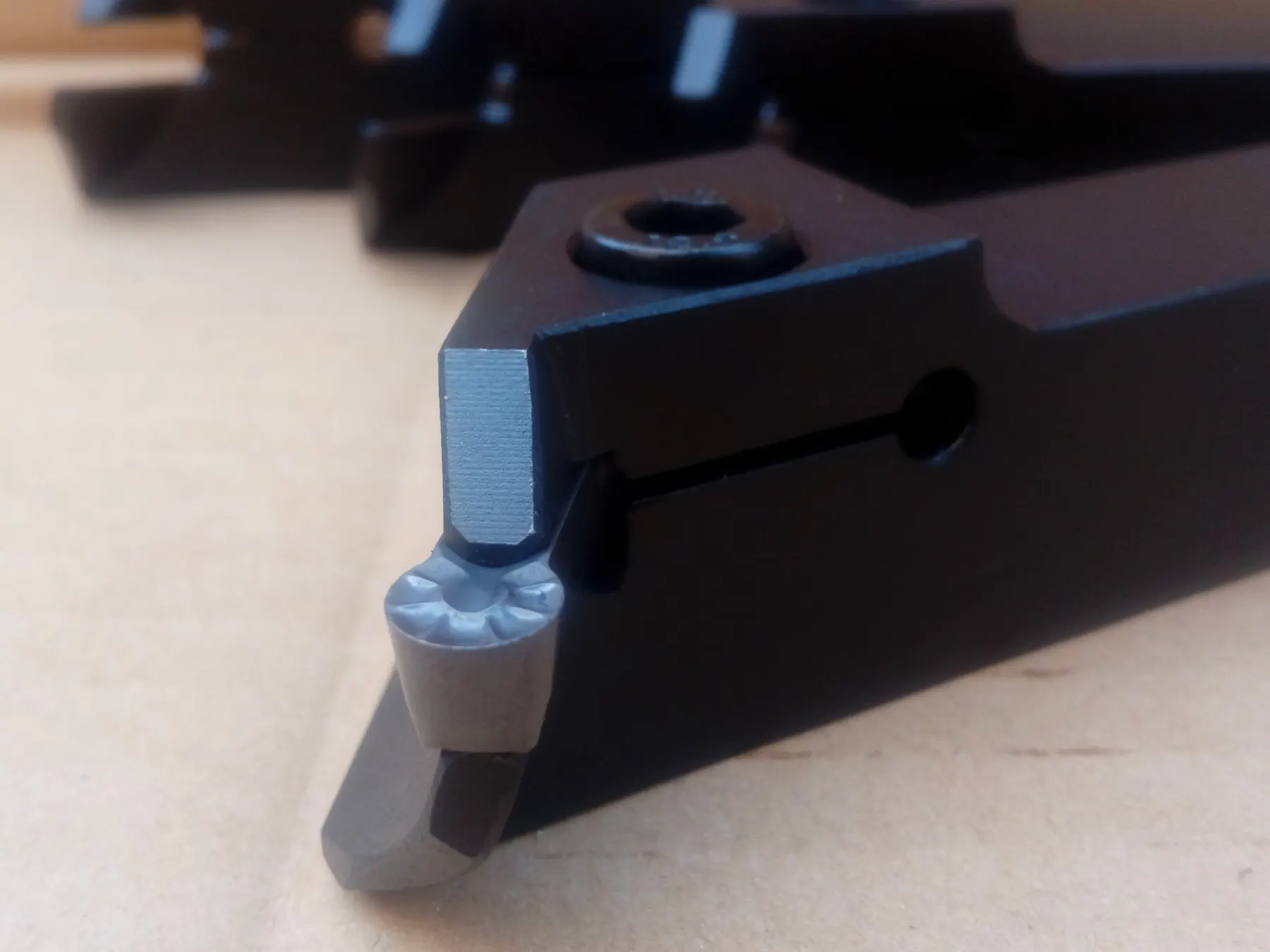
The pocket must constrain the insert on defined, repeatable reference surfaces. Uncertain contact, burrs or contamination allow the cutting edge to move under load.
Insufficient clearance for corner radii, chips or screw access is common. The insert manufacturer’s dimensional data and accurate 3D model should be used as design references.
Selection and design logic
The screw must not replace the locating geometry. Cutting-force direction, support surfaces and the locking method have to function as one system.
Reference surfaces should direct cutting force into the supports rather than lift the insert away from them. Localized contact, an undersized support wall or interference at a corner radius can produce microscopic insert rotation and tip-position change.
Implementation details and controllable errors
Another error is specifying tight tolerances without a workable inspection method. Body datum, pocket floor and walls, thread position and cutting-edge location need one measurable datum chain; otherwise a body may meet its drawing yet fail to locate the edge repeatably.
Evaluation and conclusion
Final inspection should verify floor and wall contact, full seating, corner clearance, thread condition and edge position with a reference insert. Cleaning the pocket and applying the recommended torque are controlled assembly steps, not optional advice.