
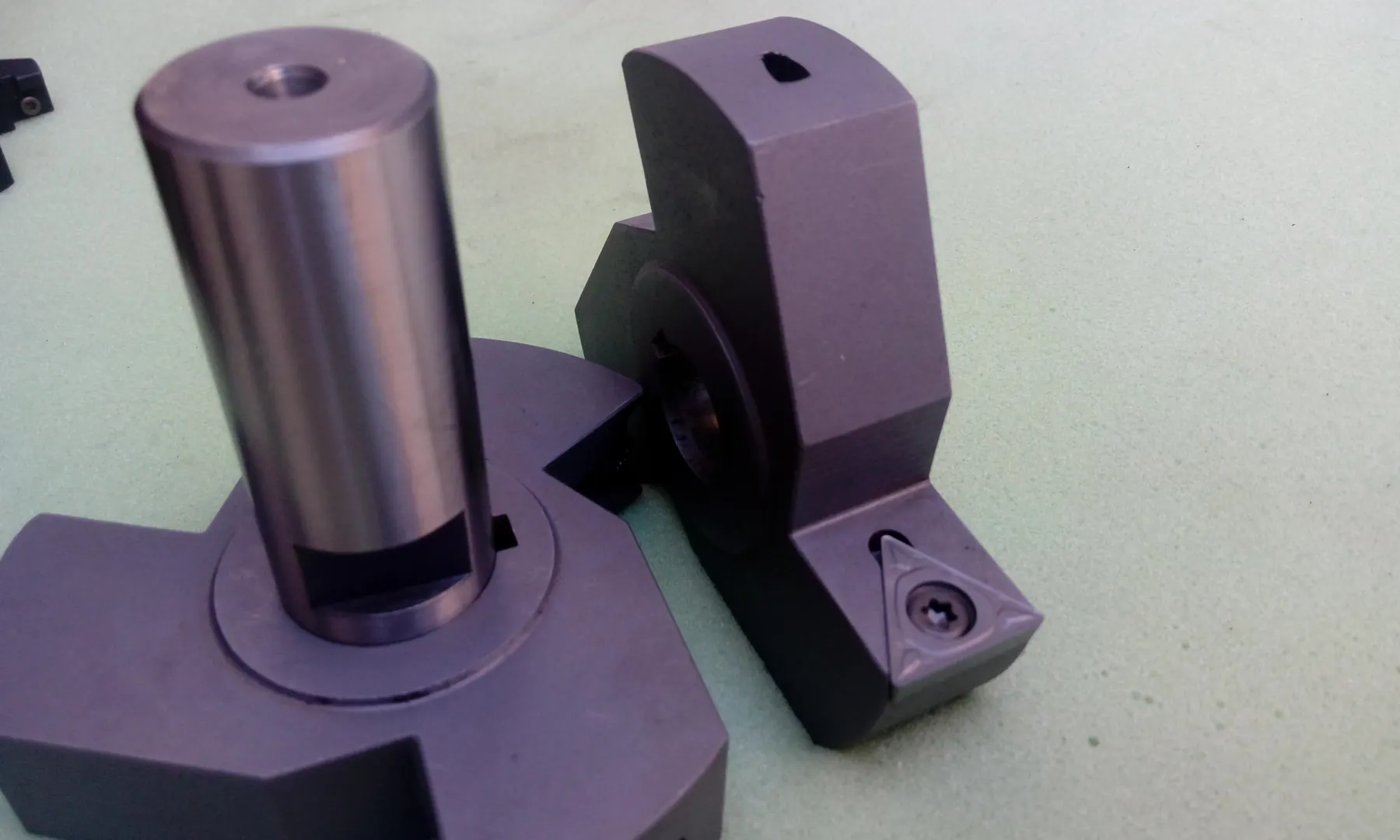
Begin with the machining problem
The correct insert is not simply one that fits the holder. Selection must account for the workpiece material, operation type, cutting continuity, machine power, system rigidity and required surface quality. Start by defining whether the operation is roughing, semi-finishing or finishing.
Roughing prioritizes edge strength and load capacity. Finishing prioritizes low cutting force, chip control and edge quality. Interrupted cuts or a scale layer generally require a tougher grade and a more robust geometry.
Insert shape and entering angle
Insert shape balances edge strength and feature access. Round and square inserts offer stronger edges, while smaller-angle diamond inserts provide better access for profiling and shoulders. Entering angle changes chip thickness, edge engagement and the direction of cutting forces.
- Stable roughing: use a stronger shape and larger corner angle.
- Profiling and limited access: consider a smaller-angle diamond insert.
- Low-rigidity workpiece or tool: use a positive geometry with lower cutting forces.
Grade, coating and workpiece material
The grade must match both the workpiece-material group and the actual cutting condition. A harder grade normally offers greater wear resistance but is more sensitive to impact and instability. A tougher grade is safer for interrupted, scaled or low-rigidity conditions. Always set the grade together with the manufacturer’s cutting-speed range.
Nose radius and surface quality
A larger nose radius strengthens the edge and can support higher feed, but it also increases radial force. If the radius exceeds the rigidity available in the system, vibration and surface deterioration can result. Feed and radius must be selected together for the required roughness.
- Avoid a large nose radius at an extremely light depth of cut; rubbing and vibration may increase.
- Keep tool and workpiece overhang as short as practical.
- Evaluate chip control in the real operation, not only from the surface appearance.
A practical trial method
Begin with conservative input data. Once the process is stable, optimize feed and depth within the geometry’s working range, then adjust cutting speed to balance cycle time and tool life. Record wear type, component count and actual cutting time so alternatives can be compared objectively.